
What to Say (and Do) When Visiting Someone on Hospice
Nervous about visiting someone on hospice? What to say, what to avoid, how long to stay, and how to make your visit a comfort instead of a burden.
By Engrace Hospice Care Team ·
When you visit someone on hospice, say the simple, true things ("I'm so glad to see you," "I've been thinking about you," "I love you") and let presence do the rest. You don't need perfect words. You need to show up, follow their lead, keep it short, and be honest instead of relentlessly cheerful.
Most people put off these visits out of fear of saying the wrong thing. Here's what actually helps, so fear doesn't cost you the visit.
Before You Go
- Check with the family or caregiver first. Energy varies day to day. Ask when the good hours usually are and whether today is a good day.
- Prepare for changes. Your friend may be thinner, sleepier, or attached to oxygen. Deciding in advance not to react with shock is a kindness; they watch visitors' faces closely.
- Plan to keep it short. Fifteen to thirty minutes is plenty. You can always come back; that's better than overstaying.
- Consider what to bring. Not flowers by default, but maybe old photos, a favorite snack if eating is still enjoyable (ask first), music you both love, or just yourself. Yourself is enough.
What to Say
The pressure to say something profound is the enemy. Simple and true wins:
- "It's so good to see you."
- "I've missed you."
- "Remember when…" Stories are gold. Reminiscing lets the person be who they've always been, not just a patient.
- "Thank you for…" Say the gratitude now, specifically.
- "I love you."
Then do the most underrated thing a visitor can do: listen. Ask "How are you doing today?" and accept whatever answer comes, including hard ones. If they say "I'm dying, you know," don't flinch or contradict. "I know. I hate it. I'm glad I'm here with you" is a complete answer.
Silence is allowed. Sitting quietly together is a visit.
What Not to Say
A few well-intended phrases consistently land badly:
- "You'll beat this." They have chosen comfort care; false hope asks them to perform optimism for your sake.
- "Everything happens for a reason." Even people of deep faith rarely find this comforting from a visitor.
- "You look great!" They know how they look. "It's wonderful to see you" is honest and kind.
- "My uncle had the same thing and…" No comparison stories.
- "Have you tried…?" Treatment quizzes and miracle cures question decisions that were hard enough the first time. If misconceptions about hospice are nagging at you, read 10 hospice myths, debunked before you visit instead.
What to Do
Words are half a visit. The rest is practical love:
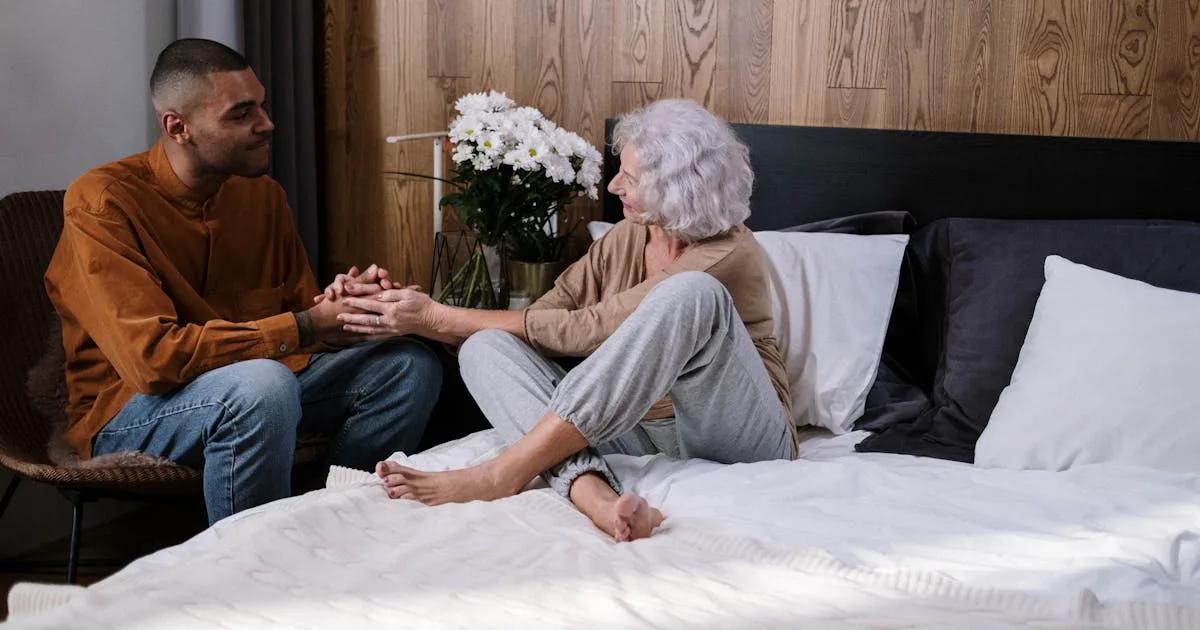
- Take cues on touch. A held hand or gentle hug can say more than an hour of talk, but ask or move slowly; some illness makes touch tender.
- Include them, don't perform around them. Share normal news from the outside world. Dying people are still interested in life.
- Offer the family something specific. "I'm bringing dinner Thursday" beats "let me know if you need anything." Caregivers rarely ask; just do.
- If they're mostly sleeping, stay anyway because hearing often remains. Speak gently, say who you are, say what they mean to you.
- Leave well. "I love you. I'll come back Tuesday." Then actually come back Tuesday.
If children will visit too, a little preparation helps them enormously; our guide on telling children a grandparent is dying covers what to say before they enter the room.
After the Visit
Hard visits echo. It's normal to sit in your car and cry, and normal to grieve someone who is still alive. Keep visiting anyway, while it's welcome; people on hospice often lose visitors precisely when they want company most, because friends "don't want to intrude." Showing up is the opposite of intruding.
And when the time comes to support the family afterward, our article on what to say to a grieving friend picks up where this one ends.
How Engrace Hospice Can Help
Engrace Hospice cares for patients and families in Pendleton, Umatilla County, Morrow County, and across Eastern Oregon. Our team, including nurses, aides, social workers, chaplains, and volunteers, can tell visitors what to expect on any given day, and our caregiver resources help the people holding everything together between visits.
If someone you love is on hospice and you're unsure how to help, call (541) 263-7494 or contact us online. We'll gladly point you toward what would mean the most.
Frequently Asked Questions
What do you say to someone who is dying?
Simple, true things: "I'm so glad to see you." "I've been thinking about you." "I love you." You don't need wise words; presence matters more than eloquence. Follow their lead, and let silence be comfortable.
How long should a hospice visit last?
Shorter than you think, often 15 to 30 minutes. Seriously ill people tire quickly, and a short warm visit beats a long draining one. Watch for fatigue, and offer to come again rather than stay longer.
What should I not say to someone on hospice?
Avoid "everything happens for a reason," "stay positive," "you'll beat this," and comparing their illness to someone else's. Don't quiz them about treatment decisions. False cheer asks a dying person to comfort you. Let honesty and warmth do the work instead.
Should I still visit if the person sleeps most of the time?
Yes, if the family welcomes it. Hearing is often the last sense to fade, and many people are comforted by familiar voices. Sit close, speak gently, hold a hand if welcome; your presence registers even when it isn't acknowledged.
This article is for general education and isn't medical, legal, or financial advice. For guidance about your specific situation, talk with your physician or call our team.
Keep reading
Talk to a hospice team member today
No pressure, no obligation. Call any time — a real person from our Pendleton team answers 24/7 — or send us a message and we'll call you back.